Before anyone calls you, your website has already answered one question on your behalf: is this business worth my time? That answer forms in seconds, based on the site’s appearance, its speed, and the signals it gives about how the business operates.
The problem is that most business owners don’t experience their website the same way visitors do. They already know the business, understand the services, and overlook the small issues that stand out to someone seeing the site for the first time. And those details often influence how visitors view the business.
This article looks at what your website communicates and how visitors interpret it. By the end, you’ll have a clearer picture of the impression your site creates and whether it matches the one you want to leave.
Your Site Looks Outdated
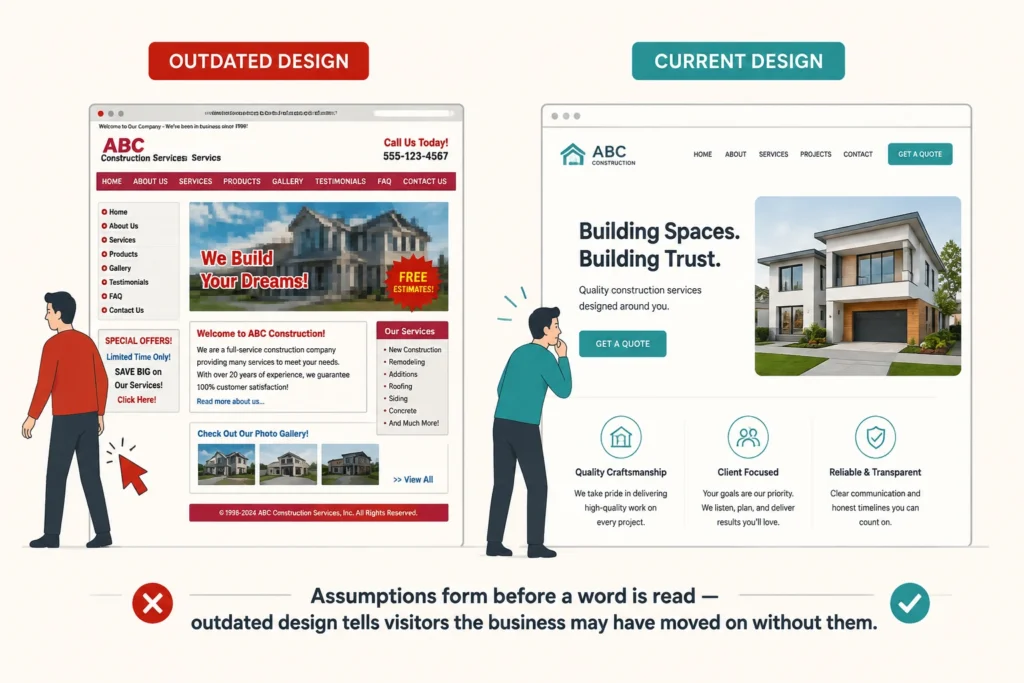
Think about the last time you landed on a website that looked like it was built in 2011. You probably clicked away without reading a word. That reaction is instinctive, and your visitors are no different.
An outdated website design tells visitors the business may be behind the times. They won’t consciously analyse it. Even so, assumptions form fast: maybe the business isn’t active, hasn’t kept up, or there are better options elsewhere.
Whether those assumptions are fair isn’t really important. Regardless, they influence how visitors see the business before a single conversation takes place.
Visitors Can’t Tell What You Do
Most visitors leave within seconds when a homepage can’t answer one basic question: what does this business actually do?
Say you’re looking for an emergency plumber. A homepage that opens with “welcome, we’ve been serving Brisbane since 1998” tells you nothing about whether they fix burst pipes at 9 pm.
Visitors want immediate confirmation that they’re in the right place. They want to know what you do, who you help, and whether you serve their area. If they have to hunt for those answers, they’ll return to the search results and choose a business that made the decision easier.
Unclear messaging is also one of the most common reasons website conversions suffer, even on sites that otherwise look the part.
The Site is Slow to Load
Google’s research shows that 53% of mobile users abandon a page that takes longer than three seconds to load. After all, visitors have plenty of other options to compare with. And if your site doesn’t load quickly, many won’t wait around. They’ll simply move on to another business.
It can also signal neglect. A slow website suggests nobody has paid attention to it in a while, which plants a small doubt before the visitor has even seen what you offer.
Missing Reviews Leave Questions Unanswered
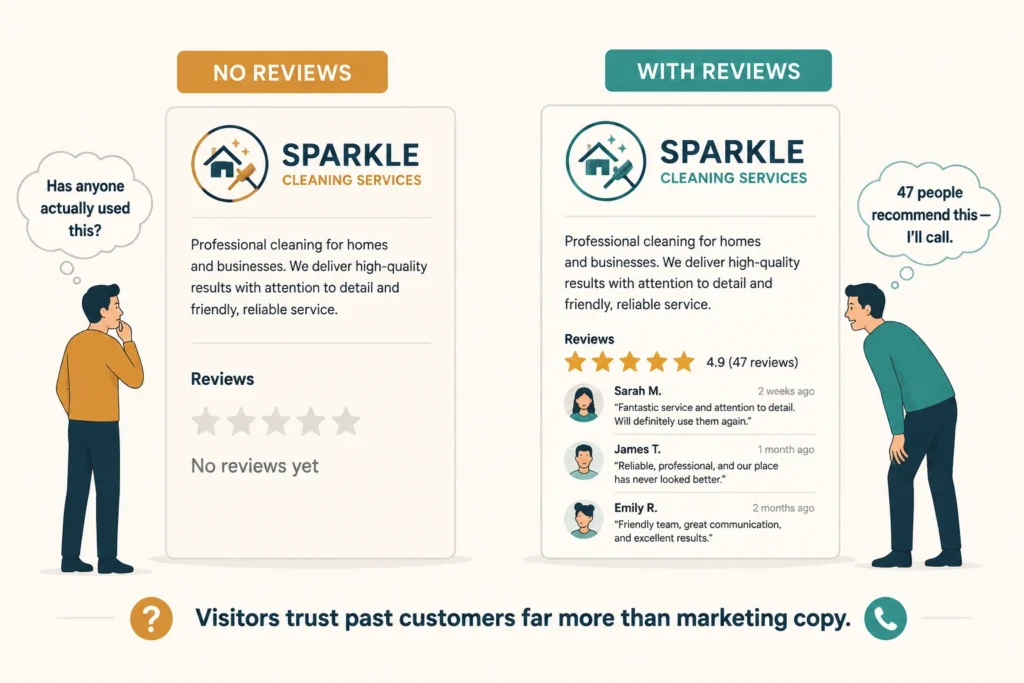
Without reviews, visitors have no way to confirm your business does what it claims. Questions start forming. Has anyone actually used this business? What was the experience like?
A polished website can describe great service in its own words, but visitors trust past customers far more than they trust marketing copy. This is because reviews provide evidence from people who have already paid for and experienced the service.
That evidence gives visitors the reassurance they need to move forward. And when it’s missing, many visitors will keep comparing until they find a business with reviews they can read for themselves.
Contact Information Is Hard to Find
If a visitor can’t find your phone number in a few seconds, they’ll assume you don’t want to be reached. Contact details buried in a footer or hidden behind a contact page send that same signal, even when it’s not true.
A phone number and address visible on every page removes that doubt. It also tells visitors you’re a real, locatable business.
Broken Links and Errors Hurt Confidence
We’ve all landed on a 404 page at some point. It takes about one second to decide the site isn’t worth the trouble. Your visitors feel the same way when they hit a broken link on your site, and that reaction goes further than just frustration.
Broken links make visitors question how much attention the site receives. If this page hasn’t been checked, what else has been missed? Most people won’t stop to investigate. They’ll simply move on, and whatever confidence they had in the business goes with them.
It Looks Like Nobody Is Maintaining It
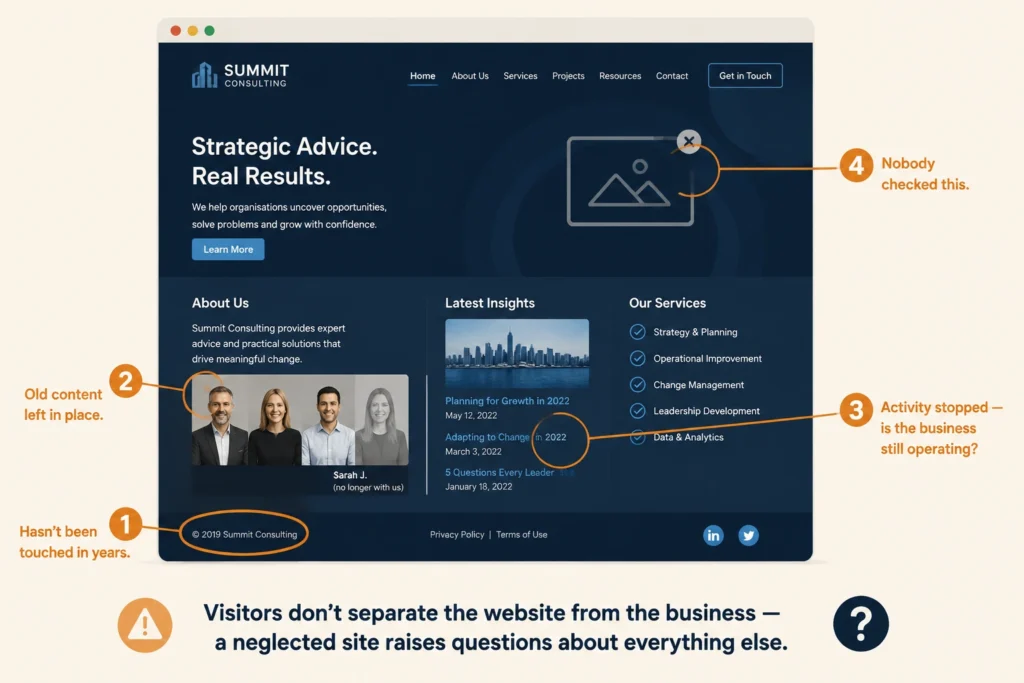
One of the most common things we see is a website that simply hasn’t been touched in years. It’s understandable. Business owners have more important things to focus on than updating their website every month. The problem is that visitors don’t know that. To them, an untouched site can look like an abandoned one.
And visitors rarely separate the website from the business behind it. If the site looks neglected, it’s easy to wonder whether the same is true elsewhere. By the time they find the next business in the search results, that question is often still sitting in the back of their mind.
Your Website Is Already Talking
Every person who visits your site leaves with an impression of your business, whether you had a hand in it or not. The design, the messaging, the speed, the reviews. Visitors read all of it and draw conclusions before you ever get the chance to speak for yourself.
And most of these signals are fixable without a full rebuild. Sometimes a few targeted changes are all it takes. If you’re not sure what your website is currently communicating, BasicLinux can help you identify the gaps and find the right next steps. Get in touch for a free consultation.
Frequently Asked Questions
Your website creates an impression the moment someone visits. Here are some common questions about the signals your site sends and how they affect trust.
What makes a good first impression website for a small business?
A good first impression website is clear, fast, and easy to trust. It helps visitors quickly understand what the business does, who it serves, and how to get in touch. For small businesses, a website that removes confusion and builds confidence can turn more visitors into enquiries.
How does web design affect first impressions?
Visitors judge a website before they explore every page. A clean layout, professional appearance, and easy navigation can create confidence, while outdated design or confusing pages can create doubt.
How can I make my site more mobile-friendly?
Start by checking how your website feels on a phone. Text should be easy to read, buttons should be simple to tap, and important information should be easy to find. A poor mobile experience can make visitors question whether the business is keeping up.
Do online reviews really affect how visitors see my business?
Yes. Reviews give visitors evidence that real customers have used your business and had a positive experience. Without that proof, potential customers have fewer reasons to trust what they see on your website.
What does poor website performance say about my business?
Slow pages, broken links, and outdated content can make visitors question how much attention the website receives. Even if the business itself is reliable, a neglected site can create doubts before you have the chance to show otherwise.
What does it take to create a website that builds trust with visitors?
A trustworthy website makes it easy for visitors to understand your services, find answers, and feel confident contacting you. Clear information, reliable performance, customer reviews, and simple navigation all help create that impression.